Montenegro's Property Market: Price Growth, Investment Opportunities and the EU Outlook
Updated:
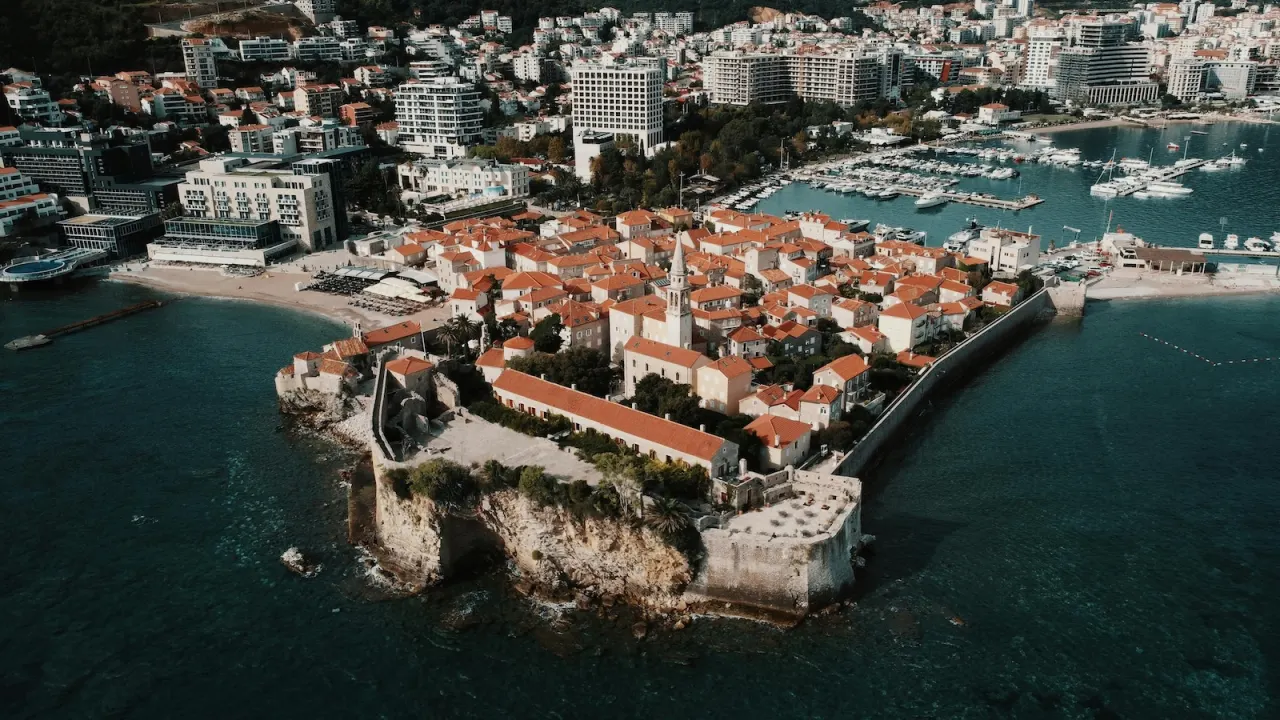
Montenegro is attracting growing attention from foreign investors, property buyers and international companies. Its Adriatic location, natural beauty, tourism potential and European outlook contribute to interest in apartments, houses, land and commercial property.
Property prices have risen significantly in recent years. At the same time, countries that have undergone EU accession show that property market development can create investment opportunities while raising challenges around housing affordability and the relationship between prices and incomes.
This article examines Montenegro's property price trends, the experience of selected EU countries and the factors buyers and investors should consider.
1. How has Montenegro's property market developed?
In recent years, Montenegro's property market has become an important area of interest for domestic and foreign investors. Demand is particularly strong on the coast, in Podgorica and in locations with established tourism infrastructure or development potential.
According to Montenegro's Statistical Office, MONSTAT, the national average price per square metre of a new-build apartment was:
- €1,341/m² in the first quarter of 2023.
- €1,936/m² in the fourth quarter of 2024.
- €2,158/m² in the first quarter of 2025.
- €2,201/m² in the second quarter of 2025.
- €2,206/m² in the fourth quarter of 2025.
These figures imply an increase of approximately 65% between the first quarter of 2023 and the fourth quarter of 2025. Compared with the fourth quarter of 2024, the average in the fourth quarter of 2025 was approximately 14% higher. Source: MONSTAT — prices of new-build apartments.
The figures show strong growth over the period, but the official statistics cover newly built apartments sold for the first time, with a first purchase agreement. They do not represent the average price of all property, including existing apartments, houses, land and commercial premises.
The average also varies with the mix and location of apartments sold. An increase in the average does not mean every individual property has appreciated by the same percentage.
2. How much do apartments cost in different parts of Montenegro?
Montenegro does not have a single uniform property market. Prices vary by town, neighbourhood, proximity to the sea, construction quality, infrastructure and intended use.
According to MONSTAT, average new-build apartment prices in the fourth quarter of 2025 were:
| Region | Average price per m² |
|---|---|
| Montenegro — overall | €2,206 |
| Podgorica | €2,141 |
| Coastal region | €2,570 |
| Central region | €1,363 |
Source: MONSTAT, fourth quarter of 2025.
The coastal region had the highest average among these regions, consistent with strong interest in property on Montenegro's coast.
The coast — tourism and international demand
Budva, Kotor, Tivat, Herceg Novi and other coastal locations attract buyers seeking a home, holiday property, long-term capital preservation or potential tourist rental income.
Prices depend on proximity to the sea, views, beach access, building quality, parking, nearby amenities and year-round usability.
Coastal markets are not uniform either. An apartment in a town centre, a new development or a neighbourhood further inland may have a very different price. Investors should assess the specific location and total costs rather than relying only on an average price per square metre.
Podgorica — a business and residential centre
Podgorica has a different demand profile. Alongside buyers seeking their own home, there is substantial interest from people moving for employment, business, education or long-term residence.
When assessing property in the capital, consider access to business districts, transport infrastructure, amenities, construction quality and the supply of apartments for long-term rental.
Northern and central Montenegro — a different investment profile
Northern and central Montenegro offer opportunities in land, houses, tourism facilities and other property, but market conditions differ from those on the coast.
A lower average price does not automatically make an investment better. Assess local demand, infrastructure access, development permissions, ownership documents and realistic prospects for resale or rental.
3. Why are property prices rising in Montenegro?
Property price growth usually reflects several factors working together. In Montenegro, the following are particularly relevant.
Foreign buyer interest. International buyers contribute to demand, particularly on the coast and in higher-quality residential and tourism developments. Their decisions depend on prices, quality of life, property availability and the legal framework for ownership and investment.
Tourism and rental potential. An established tourism sector encourages interest in apartments and houses for holidays or potential tourist rentals. Rental income still depends on location, seasonality, occupancy, maintenance, taxes and property management.
Construction costs. Land, building materials, labour, financing and infrastructure costs influence the cost of new projects and their final selling prices.
Availability of quality supply. Suitable land and high-quality residential projects can be scarce in the most sought-after areas. Demand growing faster than supply puts additional pressure on prices.
Macroeconomic conditions. Interest rates, credit availability, inflation, household incomes and international economic trends affect buyer and investor decisions.
Montenegro's European outlook. Progress towards EU membership may influence expectations about institutions, legal certainty and long-term economic integration. The impact depends on actual reforms and market conditions, not accession discussions alone.
No single factor explains the entire market. A sound investment assessment considers these factors together.
4. What happened to property prices in countries that joined the EU?
EU member states show that property markets can achieve strong long-term growth, particularly during economic convergence, infrastructure development, rising incomes and greater investor interest.
According to Eurostat, EU residential property prices rose by 53% overall between 2010 and 2024. Several countries recorded substantially larger increases:
Hungary: approximately 231%.
Estonia: approximately 228%.
Lithuania: approximately 179%.
These are cumulative changes across the whole period, not increases attributable solely to EU accession. Source: Eurostat — Housing in Europe 2025.
These examples show strong long-term price growth in some central and eastern European markets. Such outcomes are not universal and do not guarantee a similar result in Montenegro.
Croatia — experience of a market that underwent EU accession
Croatia joined the European Union on 1 July 2013. It offers a useful regional comparison because of its established tourism sector and substantial Adriatic property market.
Bank for International Settlements data available through the Federal Reserve Bank of St. Louis, FRED, show Croatia's nominal residential property price index at approximately 93.6 in the fourth quarter of 2013, with 2010 as the base year at 100. In other words, the market did not automatically rise at the moment of accession. Source: BIS/FRED — Residential Property Prices for Croatia.
Croatia subsequently entered a stronger upward phase. This shows why timing and circumstances matter: EU membership does not guarantee an immediate increase, while broader economic development, demand, tourism appeal and other factors can support long-term growth.
The Baltic states and Hungary — strong long-term growth
Estonia, Lithuania and Hungary recorded property price growth well above the EU average during 2010–2024.
Their markets developed under different economic and institutional conditions, so their experience cannot simply be transferred to Montenegro. Nevertheless, they illustrate how property prices can rise substantially over extended periods alongside changes in incomes, financing, urbanisation, demand and supply.
For potential investors in Montenegro, these comparisons can help frame long-term scenarios. They are not evidence that prices will rise by the same percentage or within the same timeframe.
5. Will Montenegro's EU accession increase property prices?
This is among the most common questions from buyers and investors considering Montenegro.
Potential EU membership could support property interest through:
Greater confidence in institutions and the legal framework, if reforms produce practical improvements.
Further infrastructure development and connections with European markets.
Changes in economic activity, employment and incomes.
Increased interest from international companies and individuals in living and doing business in the country.
Additional demand in attractive tourism and urban areas.
EU membership does not automatically increase property prices. Interest rates, financing, new apartment supply, demographics, economic conditions and the relationship between prices and household incomes also influence the market.
Property prices can also stagnate or fall during particular periods, including in developed EU countries.
Do not base an investment solely on the expectation of EU membership. Assess the specific property's price, location, quality, legal status and potential use.
6. Is now the right time to buy property in Montenegro?
The answer depends on the purpose of the purchase, the buyer's finances and their investment horizon.
Buying a home for personal use involves different considerations from buying an apartment for rental income or long-term investment. Land for future development also requires a different assessment from a completed apartment.
Before deciding, examine:
Location and market price. Compare similar properties in the same area and, where possible, completed sale prices rather than relying entirely on asking prices.
Legal status. Check ownership, cadastral registration, encumbrances, restrictions, permits and other relevant legal circumstances.
Total acquisition costs. In addition to the purchase price, allow for applicable taxes, notarial and transaction costs, commissions, financing and future maintenance.
Realistic rental income. Assess occupancy, seasonality, management, maintenance and taxes. Gross rental revenue is not the same as net return.
Liquidity and investment horizon. Consider how easily you could resell the property and whether you can retain it during weaker demand.
Risks. Past appreciation does not guarantee future growth. Base the decision on your finances and realistic assumptions.
7. Support for foreign buyers and investors — cooperation with real estate agencies
Investing in another country can be demanding. Beyond choosing a property, foreign buyers need to understand the local market, prepare documents, organise the transaction and assess administrative, tax and other obligations.
Office Montenegro cooperates with real estate agencies in Montenegro, helping clients connect with market professionals and identify properties suited to their needs.
Depending on your requirements and available listings, support can include:
Introductions to real estate agencies and relevant property listings.
Defining purchase criteria, including location, budget and intended use.
Coordination with professionals involved in the transaction.
Information about company formation in Montenegro when a purchase is connected with a business plan.
Accounting, tax and administrative support within our scope of services.
Information about residence and work procedures where relevant to the case.
Depending on the transaction, we recommend involving an appropriate legal professional to review ownership, documents and contract terms, together with other specialists for valuation, technical assessment or tax advice where needed.
Our approach centres on individual needs, transparent communication and coordination with reliable partners. We aim to make market research and purchase preparation clearer, more efficient and better organised.
8. Why choose Office Montenegro?
Office Montenegro supports foreign entrepreneurs, investors and companies developing business activities in Montenegro.
Our services include company formation, accounting, tax support and administrative procedures, with coordination of relevant partners according to the client's needs.
For clients considering property purchases, we can arrange introductions to real estate agencies and organise additional business and administrative support around the project.
Buying property is more than a financial decision. It may be part of a broader plan involving relocation, business development, long-term investment or establishing a presence in Montenegro.
We aim to provide clear information, dependable communication and coordinated support throughout the relevant stages.
Conclusion: assessing Montenegro for the long term
Montenegro's property market has recorded substantial price growth in recent years, particularly in new builds and desirable locations. Selected EU countries demonstrate the potential for strong long-term appreciation, but also show that markets develop at different speeds under many influences.
Montenegro's European outlook may be relevant when assessing long-term opportunities, but it does not guarantee appreciation of any particular property.
A sound decision requires detailed location analysis, realistic pricing, legal checks and a clearly defined purpose.
Office Montenegro can connect you with real estate agencies and provide appropriate business and administrative support when planning an investment in Montenegro.
Contact us to discuss your plans and how we can work together.